The Deal
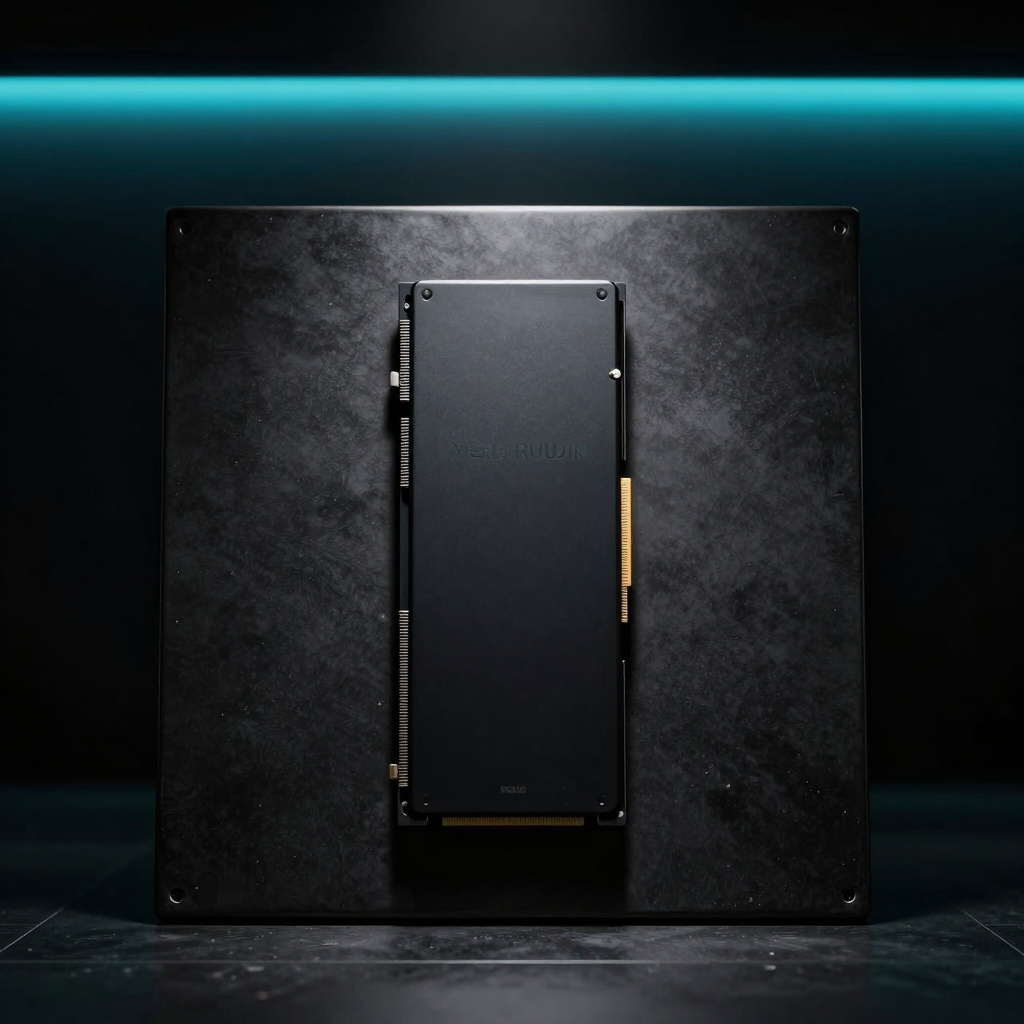
On 27 July 2026, Safe Superintelligence ended two years of operational silence by announcing a long-term strategic partnership with Nvidia. The agreement includes an undisclosed equity investment from the chipmaker and grants SSI access to Nvidia's Vera Rubin GPU platform, which the parties describe as expanding the lab's compute by an order of magnitude, roughly tenfold [S1].
SSI was founded in 2024 by Ilya Sutskever, the former OpenAI co-founder and alignment lead, alongside Daniel Levy and Daniel Gross, the latter a co-founder of the search engine Cue. The company's most recent reported valuation stands near 32 billion US dollars, a figure distinct from the size of Nvidia's check, which remains undisclosed [S2]. Neither the equity stake, the commercial terms, nor the length of the compute commitment have been made public.
The structure resembles vendor-financed compute more than a conventional venture round. Nvidia supplies both capital and the silicon substrate, and in return receives a guaranteed compute consumer at the frontier of model research. The investment is part of a broader Nvidia announcement day that also introduced the Open Secure AI Alliance [S4].
Nvidia's Calculus
Vera Rubin, Nvidia's next-generation accelerator family, requires anchor customers to validate the platform at scale before hyperscalers and second-tier labs standardise on it. SSI is an unusual anchor: a research shop with no product, no revenue, and no published model, but with a founder whose name has appeared on every major deep-learning architectural shift of the past decade.
That combination — frontier brand without an installed base — gives Nvidia a clean demand signal to cite to investors without ceding margin to a hyperscaler. FourWeekMBA frames the arrangement as vendor-financed compute that purchases frontier-research access, with the equity component functioning as both a customer-acquisition cost and a strategic option on whatever SSI eventually produces [S2].
The same-day Open Secure AI Alliance suggests Nvidia is hedging its public posture: championing open-collaboration tooling while privately underwriting the most closed research operation in the field. Read together, the two announcements indicate Nvidia treats the open-closed split as a portfolio choice, retaining the option of distributing research outcomes through either channel depending on what SSI produces.
What SSI Gets
Three things. First, silicon: Vera Rubin access at a scale the company has not previously held, sufficient to run training experiments the rest of the industry will have to queue for. Second, capital without governance concessions; the structure, as reported, does not impose product milestones, revenue targets, or release schedules on the lab [S1].
Third, signal. Coming out of stealth with Nvidia on the cap table reframes SSI from a research bet to a platform customer, which suggests a different price tag for prospective hires and partner labs weighing the company's credibility. The deal also establishes a precedent for how frontier labs can monetise compute access without commercialising output.
What the evidence does not establish is whether SSI will publish, license, or open-source any model it trains on the new hardware. The company has not announced a research roadmap, a release cadence, or a public technical agenda. The compute is concrete; the output is not.
Sources
- techcrunch.com — SSI Partners with Nvidia
- fourweekmba.com — NVIDIA and Safe Superintelligence Form Strategic Partnership as Vendor-Financed Compute… (2026-07-27)
- gigazine.net — NVIDIA has entered into a long-term strategic partnership with Safe Superintelligence, an… (2026-07-28)
- gizmodo.com — Nvidia Throws Its Support Behind OpenAI, Open AI, and… Super-Closed AI? (2026-07-28)
- New Horizon daily digest, 2026-07-28 (topic provenance)