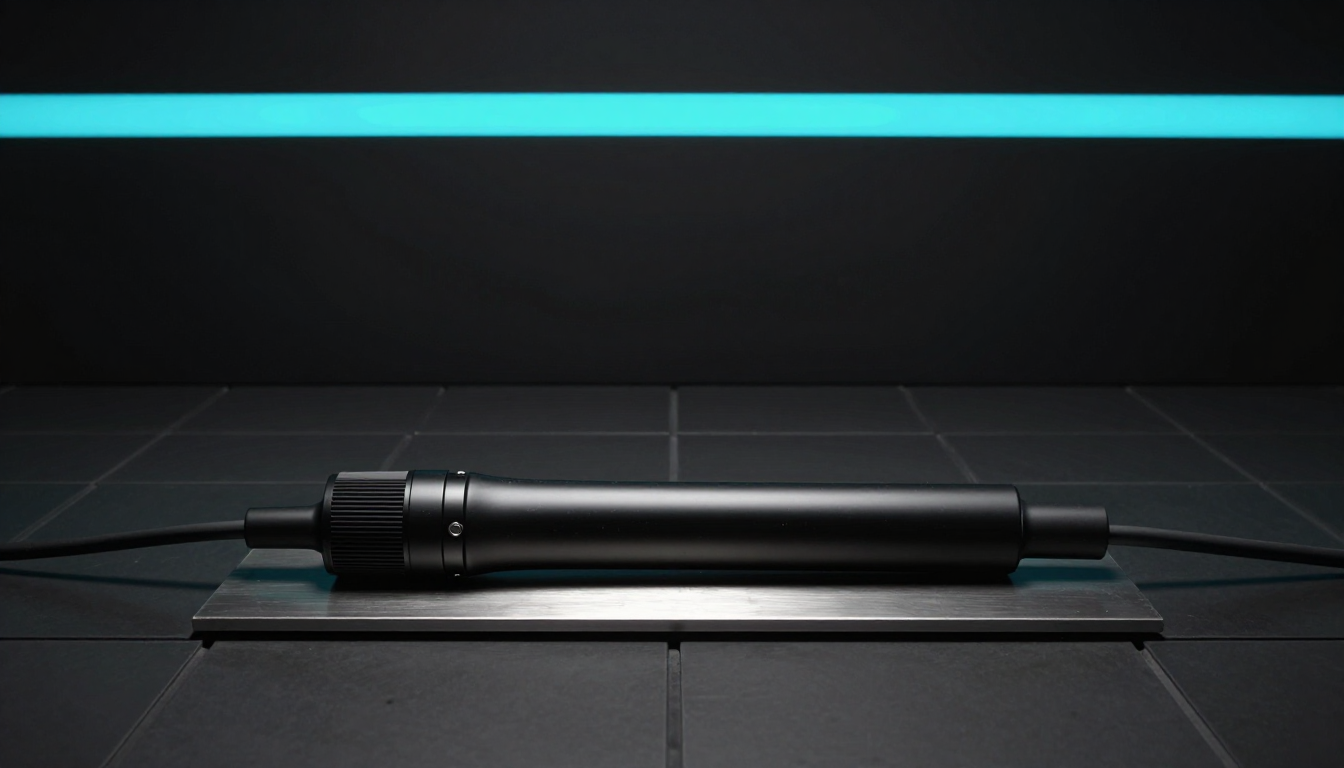
What Langley said at Disrupt
Flock CEO Garrett Langley said onstage at TechCrunch Disrupt that the company's gunshot-detection microphones pick up "just gunshots." techcrunch.com reported the remarks at 2:30 PM PDT on 14 October 2026, under a byline from Aisha Malik. Langley co-founded Flock, an Atlanta-based surveillance company whose product line spans license plate readers, video cameras, drones, and audio detection sold to law enforcement and public agencies. The quote sets a narrow boundary for what the hardware records.
The framing matters because gunshot detection is sold as a scoped instrument. A system triggered by one acoustic signature collects less than a system that listens continuously to its environment. The distinction separates an event sensor from an ambient recorder, and it determines what audio exists to be stored, searched, or handed to police. Langley's phrasing placed Flock's product squarely in the first category, at a conference where the company was presenting to buyers and press.
The problem is that the company's own published material does not hold that line. techcrunch.com's reporting paired the onstage claim against Flock's website, which it says paints a far broader picture of the ambient audio the microphones also pick up. When an executive's description of a sensor's range diverges from the vendor's product documentation, one of the two is wrong. The documentation is the version agencies can check before signing a contract.
What Flock's website says it hears
Flock publishes a page titled "Flock Gunshot Detection: What It Hears and What It Doesn't" on flocksafety.com. The title itself concedes scope: a product that hears things beyond gunshots needs a page explaining what it doesn't. The techcrunch.com report states the site describes a wider range of ambient audio than Langley's account. The specific audio categories listed on that page do not appear in the published reporting, so the exact gap between claim and site remains unquantified.
That gap has procurement weight. Agencies and municipalities buy gunshot detection on the premise of narrow collection, and the scope of collection is usually the term that decides whether a contract clears privacy review. If the marketing material describes wider pickup than the executive pitch, a buyer cannot rely on either without a written specification. The discrepancy techcrunch.com documented is precisely the kind that surfaces later in public-records disputes.
The open question is which description governs. Langley spoke once, on a stage; the website is a standing product document that Flock controls and can revise. A vendor's public documentation normally functions as the reference point when collection practices are challenged. That suggests the website rather than the stage remark is the version agencies should treat as operative, and the version Flock would need to amend if the narrow claim were accurate.
EFF's warning about voices
The Electronic Frontier Foundation published a post in October 2025 titled "Flock's Gunshot Detection Microphones Will Start Listening for Human Voices" on eff.org. The headline states the trajectory directly: a system marketed around gunfire detection moving toward voice. The post predates Langley's Disrupt remark by roughly a year, which means the scope question was documented in public before the CEO narrowed it onstage.
Voice detection changes the collection calculus. Gunshot acoustics are transient events tied to a specific incident; human voice is continuous data produced by anyone within range of the microphone, whether or not a crime is occurring. A microphone tuned to voices captures speech near it by default. EFF flagged that expansion while the product was still being described publicly as gunshot detection, which places the current discrepancy on top of an already-recorded concern.
The record leaves gaps. The reporting does not quote the ambient audio categories from Flock's site, and EFF's headline indicates direction rather than deployment detail. What is established across three documents: a CEO's narrow scope claim, a company website describing broader pickup, and a privacy organization's documented warning about voices. The testable artifacts are the website and the EFF post; both remain public and both can be checked against whatever Flock ships.
Sources
- techcrunch.com — Flock's CEO Says Its Microphones Hear 'Just Gunshots' - the Company's Website Disagrees
- eff.org — Flock’s Gunshot Detection Microphones Will Start Listening for Human Voices
- flocksafety.com — Flock Gunshot Detection: What It Hears and What It Doesn't
- wikipedia.org — Flock Safety
- New Horizon daily digest, 2026-10-15 (topic provenance)